 Villa Mon Étoile
History of Le Touquet-Paris-Plage: from the 1837 dunes to the present day
In short
Le Touquet-Paris-Plage was born in 1837, when the Parisian notary Alphonse Daloz bought a wilderness of dunes and covered it with pine trees. The "Paris-Plage" estate was inaugurated in 1882, the Englishmen John Whitley and Allen Stoneham bought the domain in 1902, and the town became a municipality in 1912. Occupied and heavily mined from 1940 to 1944, the resort was rebuilt after its liberation on 4 September 1944.
The history of Le Touquet is short, barely two centuries, but eventful. A Parisian notary bought a stretch of dunes in 1837 and planted a forest on it. An estate named "Paris-Plage" was laid out in 1882, and before the First World War English investors turned it into one of the most fashionable resorts in Europe. Here are the key milestones, with verified dates and the places in town where you can still see them.
1837-1882: a notary, some dunes and a forest
In 1837 Alphonse Daloz (1800-1885), a notary in Paris, bought the Le Touquet estate, a wild hamlet then belonging to the municipality of Cucq. Seen from the air, it was a triangle of sand of about 1,600 hectares, its northern tip bordering the Canche estuary. The name is thought to come from "touque", a local word for a point of land.
From the mid-1850s, Daloz had maritime pines, along with poplars and alders, planted over more than 800 hectares to hold the sand in place. This is the origin of the forest that still surrounds the resort. In 1864 he built himself a wooden château there and invited friends for hunting parties. Among them was Hippolyte de Villemessant, founder of Le Figaro, who suggested in the 1870s that he create a seaside resort.
1882-1912: from Paris-Plage to Le Touquet-Paris-Plage
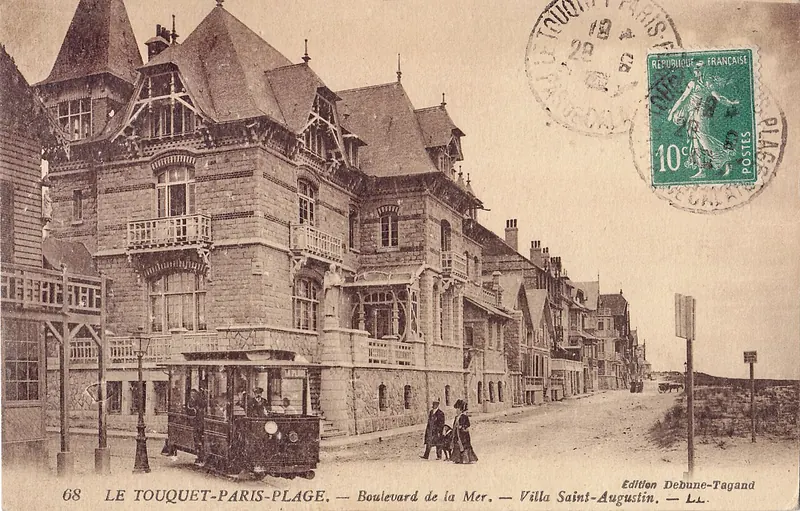
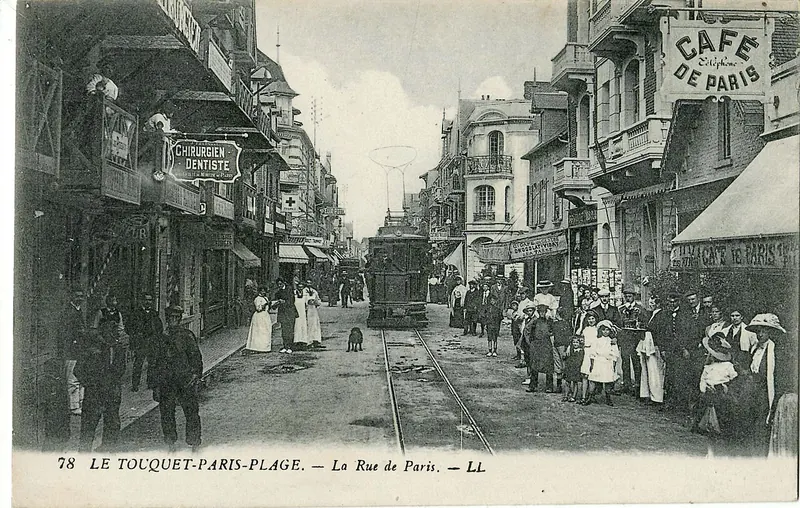
The first estate, designed by Raymond Lens, was inaugurated in 1882 under the name "Paris-Plage", chosen to attract Parisians. A year later there were still only about thirty residents, two chalets facing the sea, the Daloz château, a semaphore and two lighthouses. The name was officially recognised in 1892. In 1900 an electric tramway linked Étaples station to the beach.
After Daloz died in 1885, his heirs sold the estate. On 16 December 1902 the Englishman John Whitley won it at auction, with financing from Allen Stoneham. Their company, Le Touquet Syndicate Ltd, developed the land east of boulevard Daloz, opened a first golf course in 1904 and drew a wealthy British clientele. In 1912, after long negotiations with Cucq, the municipality of Le Touquet-Paris-Plage was finally created. It was also in 1911 that the local painter Édouard Lévêque coined the name "Côte d'Opale" (the Opal Coast).
Timeline
| Date | Event |
|---|---|
| 1837 | Alphonse Daloz buys the Le Touquet estate |
| 1850s | Planting of the pine forest begins |
| 1882 | Inauguration of the "Paris-Plage" estate |
| 1900 | Étaples – Paris-Plage tramway |
| 1902 | Estate bought by John Whitley and Allen Stoneham |
| 1904 | First golf course |
| 1912 | Creation of the municipality of Le Touquet-Paris-Plage |
| 1914-1918 | Hotels and casinos turned into military hospitals |
| 1924 / 1929 | Opening of the Westminster, then the Royal Picardy |
| 1931 | New town hall |
| 1940-1944 | German occupation |
| 4 September 1944 | Liberation by the Canadian army |
| 1949-1951 | Construction of the Canche lighthouse |
The First World War: hospitals and refugees from Ypres
Le Touquet was not on the front line, but the Opal Coast became the rear base of the British Army. From 1915, hotels and casinos were turned into hospitals with some 3,400 beds; the Casino de la Forêt became a military hospital. The resort also took in more than 6,000 Belgian refugees, and the administration of the town of Ypres moved here.
To feed everyone, the public garden was turned into a potato field. It was renamed the Jardin d'Ypres (Ypres Garden) on 30 June 1935 in memory of this episode. The town cemetery holds the graves of soldiers who died in these hospitals.
The interwar years, a glittering golden age
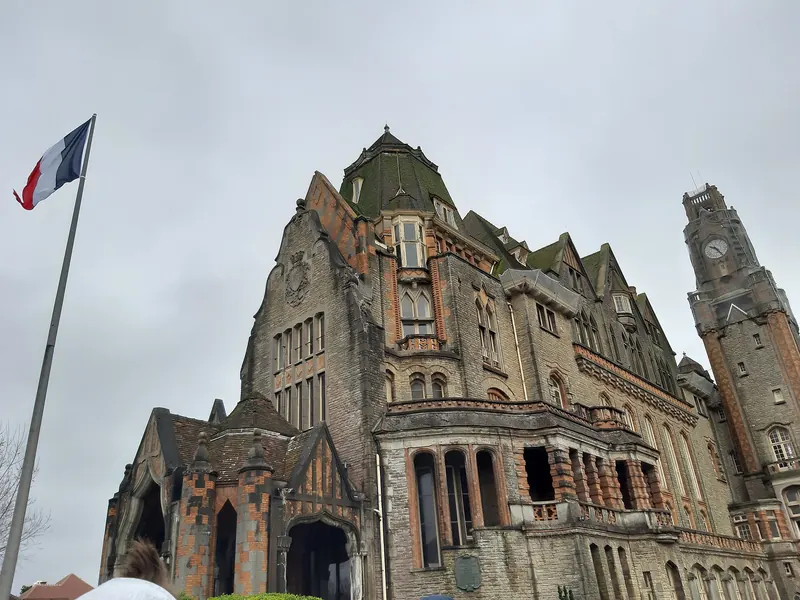
The 1920s were Le Touquet's heyday. The Casino de la Forêt, built on the site of the Daloz château, was in 1927 the highest-earning casino in France. The Prince of Wales, the future Edward VIII, played baccarat there. The resort then acquired its major landmarks:
- the Westminster hotel, opened in 1924;
- the Royal Picardy, a 500-room palace hotel inaugurated in 1929, closed in 1951 and demolished in 1968;
- the town hall and its 38 m belfry, built in 1931;
- the semicircular covered market, completed in 1932;
- an airport, opened in 1936.
The writer P. G. Wodehouse settled in Le Touquet in 1934. This was also the era of Art Deco and Anglo-Norman villas, which we describe in our article on Le Touquet's architecture.
1940-1944: occupation, mines and destruction
On 21 May 1940 two German officers presented themselves at the town hall: the Occupation lasted four years. Around 40,000 soldiers were stationed in the town, P. G. Wodehouse was interned as early as July 1940, and the seafront became part of the Atlantic Wall. The Atlantic Hôtel was razed in 1943. Allied bombing in 1944 hit the town hard; the Sainte-Jeanne-d'Arc church was largely destroyed on 4 June 1944.
Canadian troops liberated an empty, devastated town on 4 September 1944. The press then nicknamed it "the most heavily mined town in France": more than 90,000 mines and explosive devices were cleared over three years, at the cost of many lives among the deminers. Two bunkers still stand on the beach.
Reconstruction and Le Touquet today
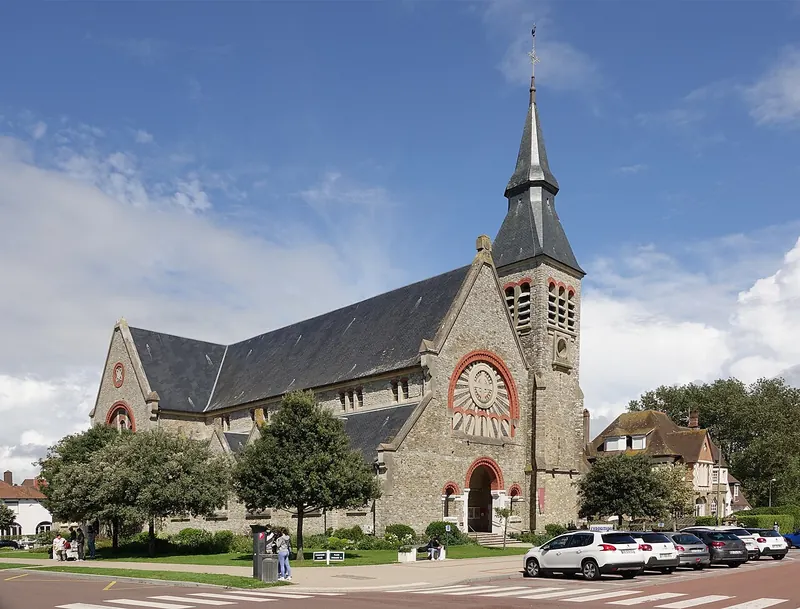
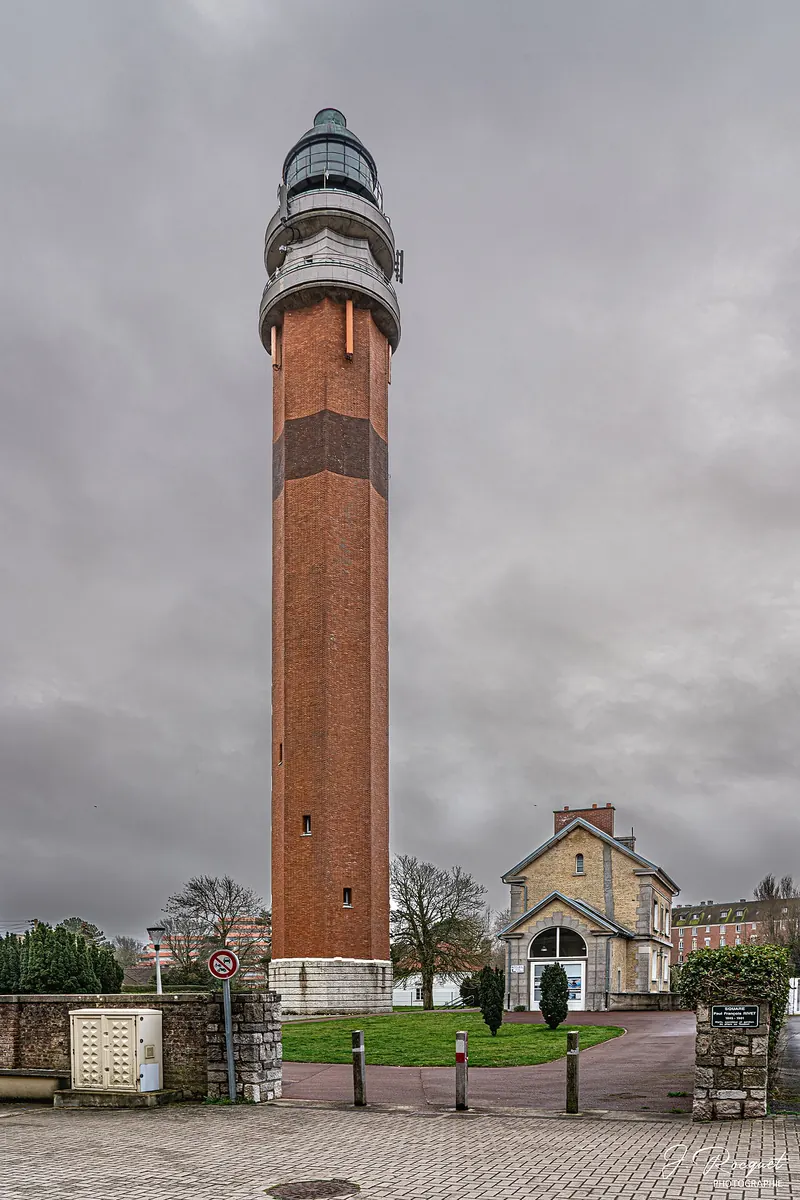
The beach reopened in 1945. The architect Louis Quételart designed a new Canche lighthouse, built from 1949 and completed after his death; it replaced the two 19th-century lighthouses destroyed by the occupying forces. The church was rebuilt between 1950 and 1955 and the first high-rise residence on the seafront appeared in 1961. Today the town has just over 4,000 year-round residents and around twenty buildings listed as historic monuments.
Where to see this history in town
- The Palais des Congrès, place de l'Hermitage: it stands on the site of Alphonse Daloz's wooden château, replaced in 1913 by the Casino de la Forêt.
- The Jardin d'Ypres, between the church and the town hall: the former potato field of 1914-1918.
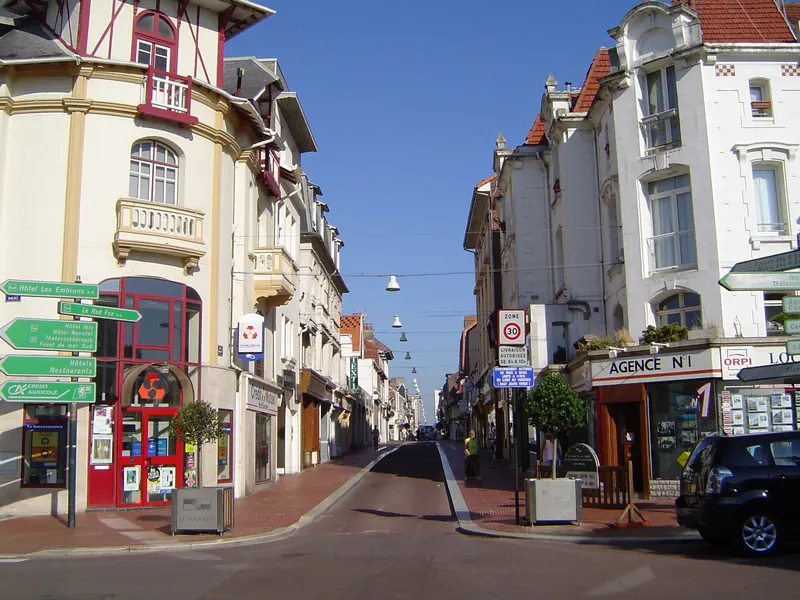
- Boulevard Daloz: the historic main axis of the estate, named after its founder.
- The town hall: its function room is decorated with frescoes depicting the history of the Canche bay.
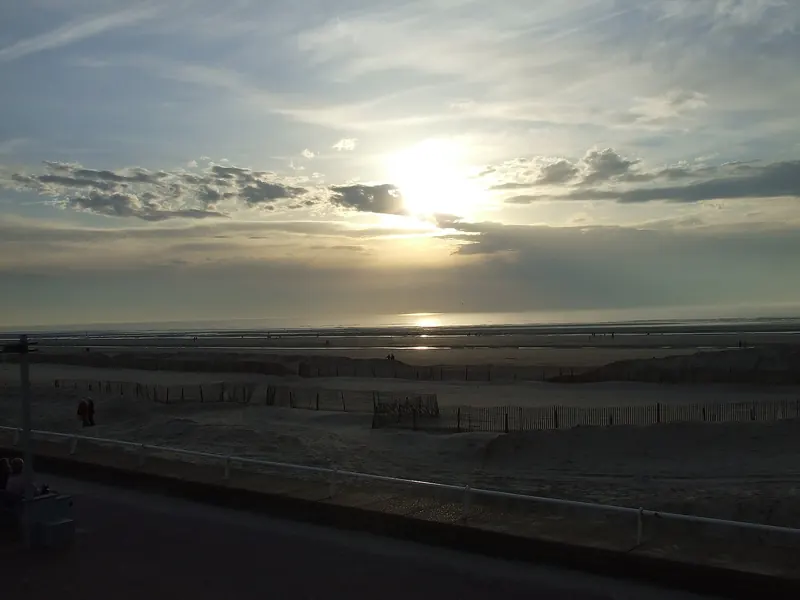
- The beach at low tide: the Atlantic Wall bunkers are a reminder of the Occupation.
Charles's tip: to experience this history on the ground, book a guided tour with the tourist office (town hall, seafront, or forest villas by bike). Then visit the Villa Way Side museum, whose collection of signed portraits tells the story of the glamorous years better than any book.
From Villa Mon Étoile, a 1920 villa on rue d'Étaples, the historic centre can be explored entirely on foot. To plan your visits, see our selection of places to visit in Le Touquet, the walk through the iconic streets and our portrait of the famous people who shaped the resort. Our apartments are ready for your stay.
Frequently asked questions
Who founded Le Touquet-Paris-Plage?
The Parisian notary Alphonse Daloz bought the estate in 1837, planted the forest and created the Paris-Plage estate in 1882. The Englishmen John Whitley and Allen Stoneham, who bought the domain in 1902, turned it into an international resort.
Since when has the town been called Le Touquet-Paris-Plage?
Since 1912, when Paris-Plage was separated from the municipality of Cucq and became a town in its own right under the name Le Touquet-Paris-Plage.
Why is the resort called "Paris-Plage"?
The name, suggested by the circle of Hippolyte de Villemessant, founder of Le Figaro, was meant to attract Parisian visitors. It was given to the estate inaugurated in 1882.
When was Le Touquet liberated?
On 4 September 1944, by the Canadian army. The town, heavily mined, then needed three years of mine clearance.
Who invented the name "Côte d'Opale"?
The Le Touquet painter Édouard Lévêque, in 1911, in reference to the shifting, opal-like reflections of light on the sea.
Sources and fact-checking
- letouquet.com/le-touquet-paris-plage/paradis-de-la-culture-et-du-patrimoine/aux-
- letouquet.com/le-touquet-paris-plage/paradis-de-la-culture-et-du-patrimoine/dune
- letouquet.com/le-touquet-paris-plage/paradis-de-la-culture-et-du-patrimoine/art-
- fr.wikipedia.org/wiki/Le_Touquet-Paris-Plage
- fr.wikipedia.org/wiki/Alphonse_Daloz
- en.wikipedia.org/wiki/History_of_Le_Touquet
- fr.wikipedia.org/wiki/Royal_Picardy
- fr.wikipedia.org/wiki/Phare_du_Touquet
- pss-archi.eu/immeubles/FR-62826-79658.html
Stay in the heart of Le Touquet
To enjoy everything described here on foot, stay at Villa Mon Étoile: two 55 m² apartments in an Art Deco villa, 300 m from the beach, from €140 per night.