 Villa Mon Étoile
Celebrities in Le Touquet: the famous figures who shaped the resort
In short
Le Touquet-Paris-Plage owes its reputation to a long list of personalities: its founders (Daloz, Whitley), sporting and aviation pioneers (Coubertin, Blériot), the British smart set of the 1930s (Noël Coward, P. G. Wodehouse), writers and artists (Van der Meersch, Dubuffet, Gainsbourg). Today the resort remains linked to Emmanuel and Brigitte Macron.
Which celebrities have spent time in Le Touquet? The best documented are Baron Pierre de Coubertin, the aviator Louis Blériot, the English writer P. G. Wodehouse, the playwright Noël Coward, the composer Maurice Ravel, the novelist Maxence Van der Meersch, the painter Jean Dubuffet and Serge Gainsbourg, who played the piano in one of the resort's restaurants. More recently, Le Touquet has become known as the home base of Emmanuel and Brigitte Macron.
Here is who really left their mark on the resort, in which era, and where you can still see traces of them on a stroll.
The founders: a notary, a press baron and an Englishman
Before the stars came the builders. In 1882 the Parisian notary Alphonse Daloz created the first estate on dunes he had bought and planted with pines. The name "Paris-Plage" was popularised by Hippolyte de Villemessant, the head of Le Figaro, who saw this beach as the Parisians' future seaside.
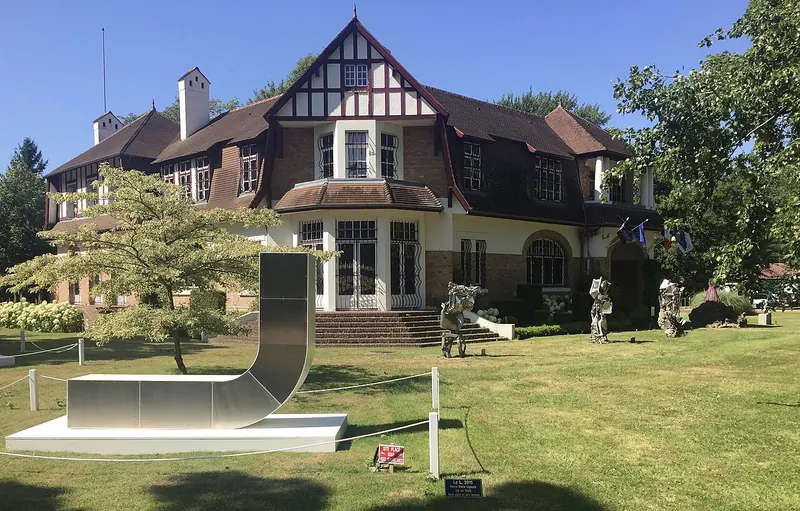
At the beginning of the 20th century the English industrialist John Whitley took over the estate and in 1902 launched a second development on the forest side, laid out by the surveyor Joseph-Louis Sanguet. With Allen Stoneham, he attracted a wealthy British clientele: this is the origin of Le Touquet's very "English" atmosphere, still visible in the architecture of its villas.
Pioneers of sport and aviation
Very early on, the resort styled itself a "paradise of sports". Several big names left a tangible mark:
- Pierre de Coubertin, the founder of the modern Olympic Games, opened a "sports ground" in 1903 (running, fencing, tennis, cycling) and helped create the Cercle international du Touquet.
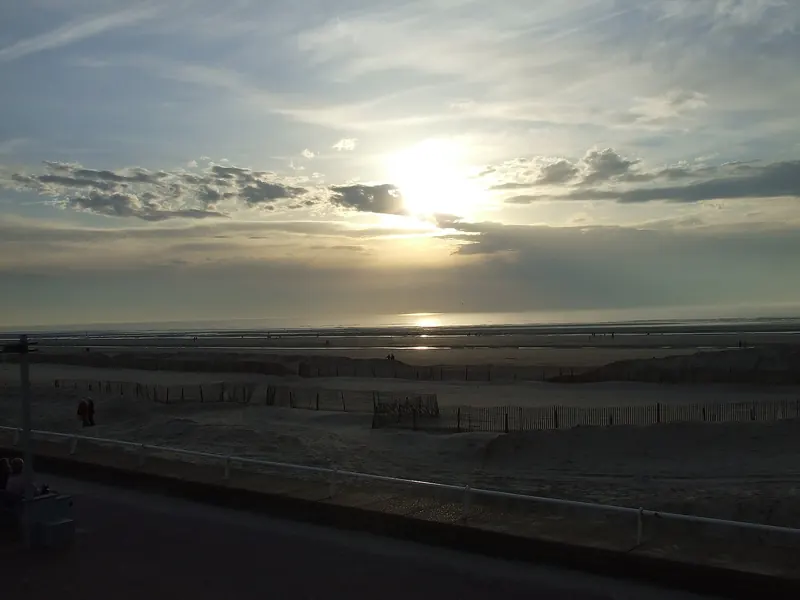
- Louis Blériot settled in Paris-Plage in 1906 and made his first gliding trials over the dunes. He also designed the "aéroplage", the forerunner of the sand yacht, later perfected by local man Henri Demoury.
- Suzanne Lenglen, the future world tennis star, won the Le Touquet international tournament in 1913, aged 14.
- Horace Hutchinson, the English golfer and writer, designed the first course, La Forêt, in 1904; it is still played today (see our article on golf in Le Touquet).
This heritage explains why the resort still hosts major competitions, from the Enduropale to international show jumping.
The 1920s and 1930s: the British smart set
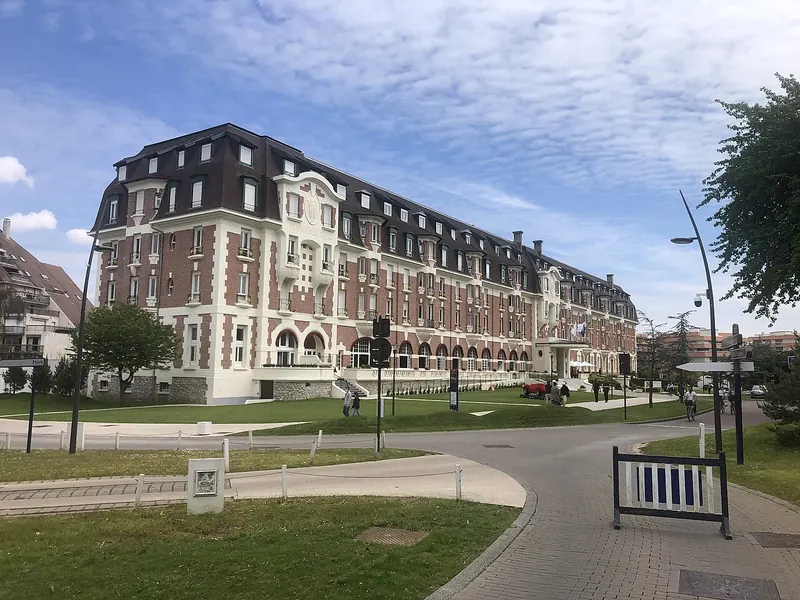
After the First World War, Le Touquet became the fashionable haunt of English high society, just a few hours from London. The playwright Noël Coward and his friends spent their weekends here and commissioned boldly styled villas. In 1929 the Royal Picardy opened, a 500-room palace hotel the British nicknamed "the finest hotel in the world"; it did not survive the Depression.
The humorist P. G. Wodehouse, creator of Jeeves and Wooster, lived in Le Touquet from 1934 to 1940. He worked here on Joy in the Morning, among other books, before being interned by the German army in 1940. A commemorative plaque marks his house, Villa Low Wood. The composer Maurice Ravel also stayed in the resort between the wars.
Another British nod: in On Her Majesty's Secret Service, Ian Fleming places the imaginary resort of Royale-les-Eaux, the setting of Casino Royale, on the road to Le Touquet. Many readers see it as a nod to the Le Touquet coast, though the author never confirmed it.
Writers, painters and musicians
The light of the Opal Coast and the calm of the forest have drawn many creative minds:
- Édouard Lévêque, a Le Touquet painter and writer, coined the name "Côte d'Opale" (Opal Coast) in 1911.
- Philippe Hériat wrote L'Innocent in a villa in the resort; the novel won the Prix Renaudot in 1931.
- Maxence Van der Meersch bought a villa in 1949, which he named "La Maison dans la dune" after his first novel. He died there in 1951; the town's secondary school bears his name.
- Jean Dubuffet had a villa-studio built near today's museum; his wife came from the Étaples area.
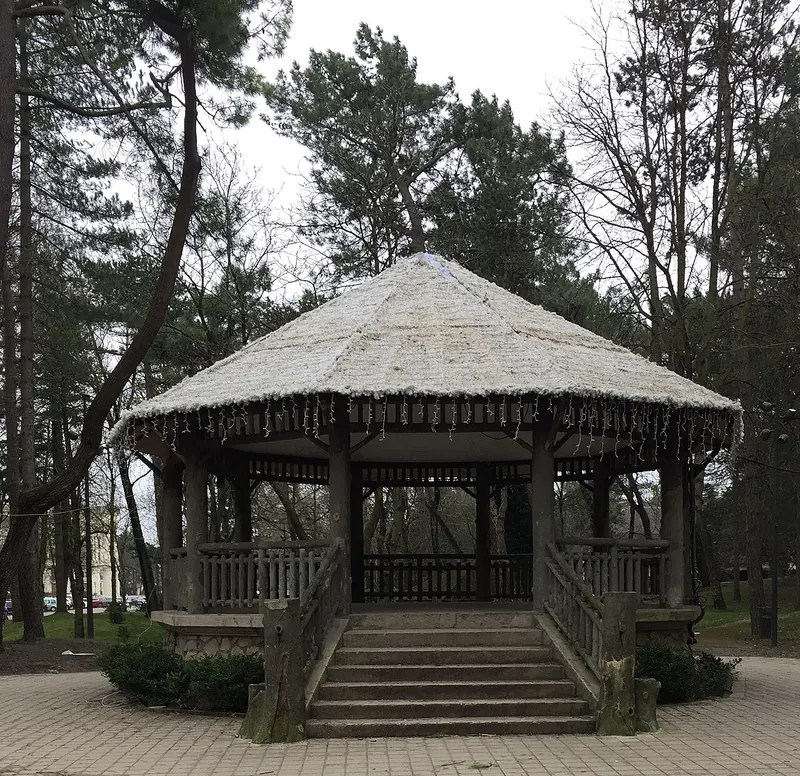
- Serge Gainsbourg, then still Lucien Ginsburg, played the piano in the 1950s at the Flavio restaurant, where he composed "Le Poinçonneur des Lilas". The bandstand in the parc des Pins now bears his name.
- The violinist Christian Ferras was born in Le Touquet, where his parents ran hotels; the actor Philippe Noiret, a keen horseman, regularly came here on holiday.
To find out more, read our article on Le Touquet's artists and galleries.
At a glance: who, when, and what trace?
| Person | Period | Link with Le Touquet | Visible trace |
|---|---|---|---|
| Alphonse Daloz | 1882 | Founder of Paris-Plage | Boulevard Daloz |
| Pierre de Coubertin | 1903-1904 | Sports ground, Cercle international | The resort's sporting tradition |
| Louis Blériot | 1906-1910 | Flight trials, aéroplage | Sand yachting on the beach |
| P. G. Wodehouse | 1934-1940 | Resident | Plaque on his villa |
| Maxence Van der Meersch | 1949-1951 | Resident, died in Le Touquet | School named after him |
| Serge Gainsbourg | 1950s | Bar pianist | Bandstand in the parc des Pins |
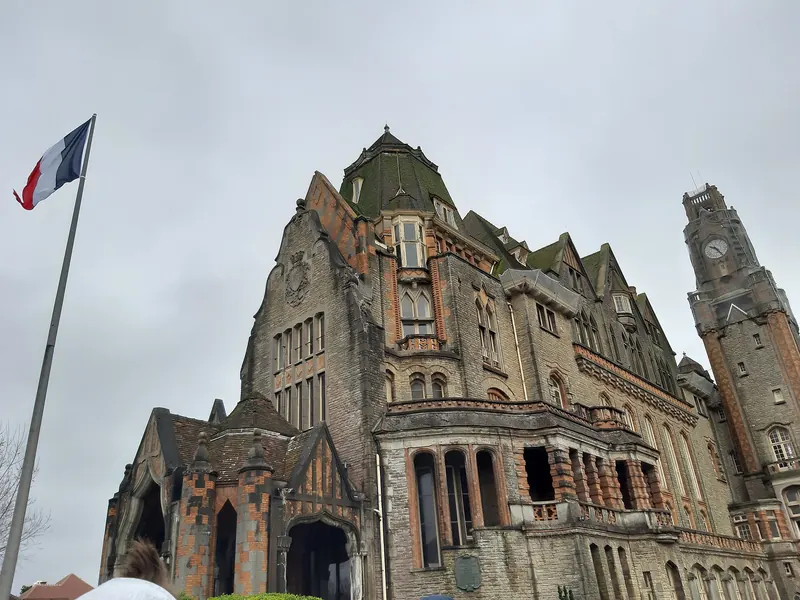
| Emmanuel and Brigitte Macron | since the 2000s | Married in 2007, home base | Town hall (wedding venue) |
Today's Touquettois and the Macrons
Le Touquet remains a small town: a few thousand year-round residents, the Touquettois, and nearly 80% second homes according to INSEE, the French statistics office. In summer the population can rise to 250,000. This double life, quiet in winter and lively in summer, is part of the resort's character. Natives of Le Touquet also include former agriculture minister Philippe Vasseur and Jacques Delcourt, founder of the French Karate Federation.
Since 2017 the town has been mentioned above all as that of Emmanuel and Brigitte Macron, who married at Le Touquet town hall in 2007. We cover this connection, and what has been made public about it, in our article on the Macrons in Le Touquet. The resort also hosted a Franco-British summit between Jacques Chirac and Tony Blair in 2003.
A word of caution: you often read that Coco Chanel, Greta Garbo, Agatha Christie or Hergé had a house in Le Touquet. We have found no reliable source for these claims, which is why we don't repeat them.
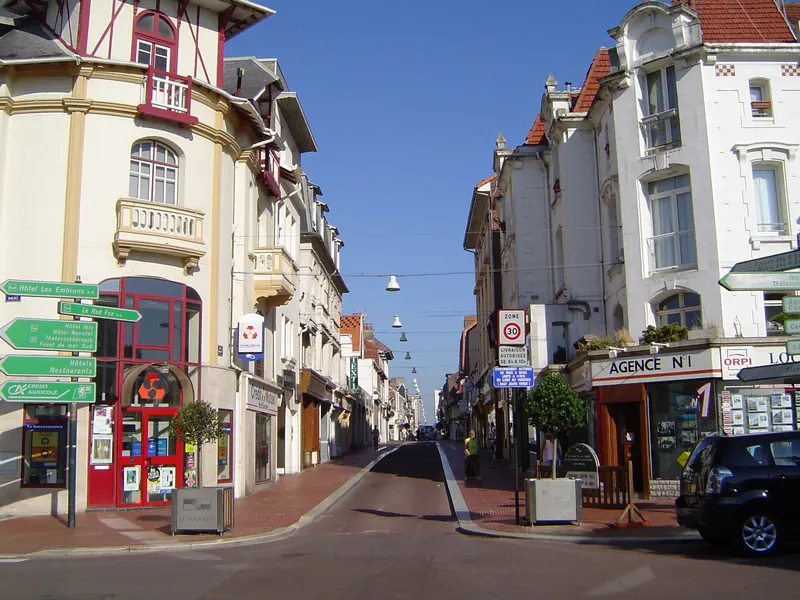
Charles's tip: do this "celebrity trail" on foot in an hour. Walk down rue Saint-Jean to the sea: on the corner of boulevard du Docteur-Jules-Pouget, a plaque recalls the stay of Resistance heroine Louise de Bettignies in 1915. Come back through the parc des Pins and its Gainsbourg bandstand, then finish at the town hall. From Villa Mon Étoile, rue Saint-Jean is 200 metres away.
To place each name in its era, our history of Le Touquet-Paris-Plage covers the resort's key dates.
Frequently asked questions
Which celebrities have lived in Le Touquet?
Among the best-documented residents: the writer P. G. Wodehouse (1934-1940), the novelist Maxence Van der Meersch (1949-1951), the painter Jean Dubuffet, who had a villa-studio here, and today Emmanuel and Brigitte Macron.
Did Serge Gainsbourg live in Le Touquet?
He didn't live there permanently, but he played the piano in the 1950s at the Flavio restaurant, where he composed "Le Poinçonneur des Lilas". The bandstand in the parc des Pins bears his name.
Why do the British love Le Touquet?
The resort was developed in the early 20th century by the Englishman John Whitley, and British high society spent its weekends here in the 1920s and 1930s. The golf courses, horse racing and the airfield strengthened the bond.
What are the inhabitants of Le Touquet called?
The inhabitants of Le Touquet-Paris-Plage are called Touquettois (men) and Touquettoises (women).
Sources and fact-checking
- fr.wikipedia.org/wiki/Le_Touquet-Paris-Plage
- en.wikipedia.org/wiki/P._G._Wodehouse
- en.wikipedia.org/wiki/Royale-les-Eaux
- letouquet.com/le-touquet-paris-plage/paradis-de-la-culture-et-du-patrimoine/en-a
- letouquet.com/le-touquet-paris-plage/paradis-de-la-culture-et-du-patrimoine/art-
- insee.fr/fr/statistiques/2011101?geo=COM-62826
Stay in the heart of Le Touquet
To enjoy everything described here on foot, stay at Villa Mon Étoile: two 55 m² apartments in an Art Deco villa, 300 m from the beach, from €140 per night.