 Villa Mon Étoile
Kitesurfing on the Opal Coast: spots, Le Touquet and schools
In short
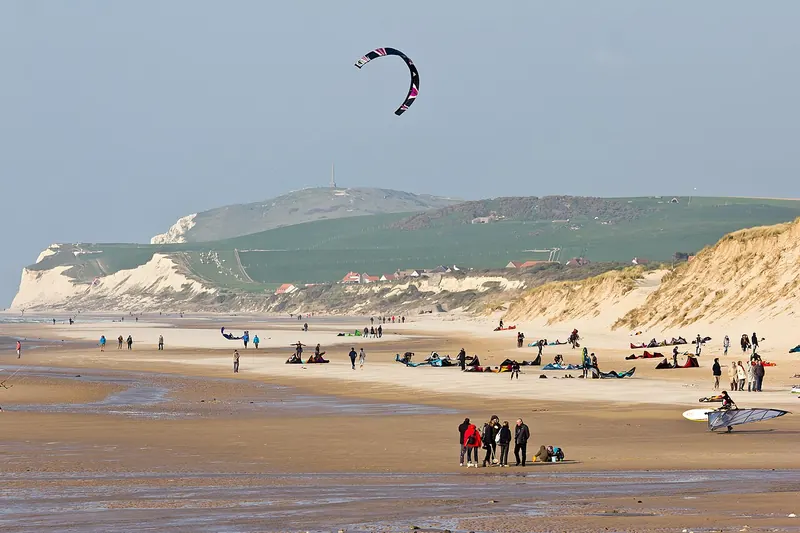
The Côte d'Opale (Opal Coast) is one of the windiest kitesurfing regions in France. Wissant and the Pointe aux Oies are the flagship spots for experienced riders, while Le Touquet, Berck and Cayeux-sur-Mer have huge beaches to learn on; in Le Touquet, the École de Kitesurf des 3 Baies teaches at the Bertrand Lambert sailing centre.
For kitesurfing on the Côte d'Opale, two areas stand out: the north, around Wissant and Wimereux, for independent riders, and the south, from Le Touquet to the baie de Somme, for learning on vast beaches. The wind blows often, but the tide rules everything: the same spot can be perfect at mid-tide and dangerous at high tide. Here's what you need to know to choose.
Why the Opal Coast is kite country
Exposed to the westerly and south-westerly winds funnelling up the Channel, the coast gets steady winds, often stronger than elsewhere along the French coastline. The wide, sandy beaches leave plenty of room for launching and landing. The flip side is the tides: with a tidal range of 6 to 7 metres, the water can reach the sea walls and tidal currents can exceed a swimmer's speed. A few principles apply everywhere:
- South-westerly wind: ride preferably after high water, when the tide is slowly going out.
- North-easterly wind: the period after low water is often the most pleasant.
- Wind and current in the same direction: conditions quickly become tricky, especially for getting back to your starting point.
- Offshore wind (easterly on most beaches): avoid at all costs, it carries you away from the shore.
Northern spots: Wissant, Wimereux, Pointe aux Oies
Wissant
The region's iconic spot, between Cap Blanc-Nez and Cap Gris-Nez. It works in a south-westerly (side-shore), but also in a gentler north-easterly. Launch at the north-eastern end of the village: at high tide, the beach disappears in front of the promenade. With a westerly wind and a rising tide, the current can be very strong. The water is shared between kitesurfers and windsurfers, hence the importance of right-of-way rules.
Wimereux and the Pointe aux Oies
In Wimereux, it's best to ride around low water: at high tide, the surf zone reaches the sea wall. The Pointe aux Oies, just to the north, is, along with Wissant, one of the most popular spots for its wind orientation and safety; neighbouring Ambleteuse is an alternative in a south to south-easterly wind at high tide.
Other options around Boulogne and Calais
The harbour at Boulogne-sur-Mer, sheltered by its breakwaters, suits beginners and freeriding; Equihen-Plage and Sangatte, where the wind is often a little stronger, round out the choice. Several schools are based between Wissant and Wimereux.
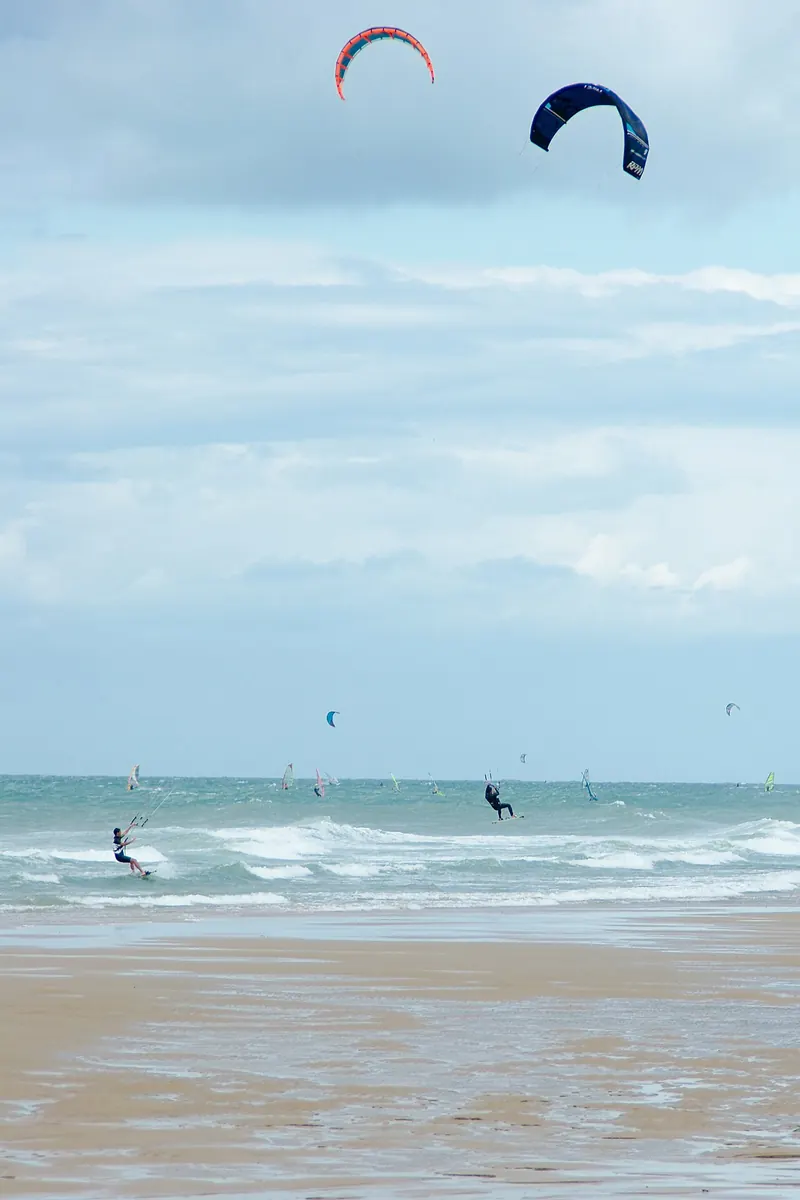
Kitesurfing in Le Touquet: the École de Kitesurf des 3 Baies
At the southern end of the main beach, the Centre nautique de la Manche Bertrand Lambert is home to the École de Kitesurf des 3 Baies (EK3B), run by instructors holding the French BPJEPS kite qualification. What sets it apart:
- private lessons or small groups, with a maximum of three beginners;
- a permanent radio link between instructor and student;
- all equipment provided: kite, board, wetsuit, buoyancy vest and helmet (boots not lent, bring your own or buy on site);
- inflatable and foil kites and boards to suit all builds, from 35 kg, in light or strong winds.
Le Touquet's huge expanse of sand at low tide is good ground for the first steps: flying the kite on the beach, body dragging, then a waterstart in shallow water. The school's contact details are on the tourist office page.
Charles's tip: for a kite course, leave two or three spare days in your stay. You can't order the wind, and schools are happy to move a session to the next day; a four-night stay gives you time for three full sessions.
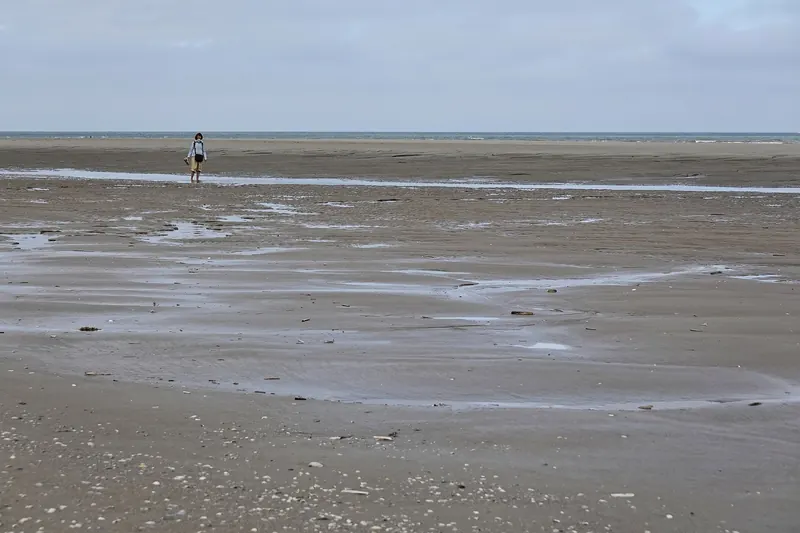
Further south: Berck, the baie d'Authie and Cayeux-sur-Mer
The southern Côte d'Opale and the Picardy coast have the widest beaches in the region:
| Spot | Strength | Level | Journey from Le Touquet |
|---|---|---|---|
| Le Touquet | Huge expanse of sand at low tide, school on site | Beginner to advanced | on the spot |
| Hardelot | Multi-activity watersports base opened in 2022 | Beginner to advanced | approx. 30 min |
| Berck-sur-Mer | Big beach, kite and land-yachting schools | Beginner to advanced | approx. 25 min |
| Cayeux-sur-Mer | More than 14 km of sand at low tide | All levels | approx. 1 hr |
| Wissant | Flagship spot, steady winds | Advanced | approx. 50 min |
| Pointe aux Oies | Favourable orientation, natural setting | Intermediate to advanced | approx. 45 min |
Berck is also the kite-flying capital: its international kite festival brings hundreds of kites to the beach every spring, a sight to combine with a session.
Learning to kitesurf: how many sessions?
Kitesurfing is quicker to learn than you might think, provided you go through a school. A typical beginner's progression looks like this:
- Session 1: theory of wind and the wind window, safety, flying a small training kite on the sand.
- Sessions 2 and 3: flying the full kite, body dragging to learn to move through the water and recover your board.
- Sessions 4 onwards: first starts on the board (waterstart), then first runs and riding upwind.
It usually takes between 6 and 10 hours of lessons to manage your first runs, and more to become independent. A steady side-shore wind of 12 to 20 knots is ideal for learning, which is why instructors choose the slot the day before or that same morning. Good swimming ability and normal fitness are enough; the minimum age depends on weight, as the kite must be controllable safely.
Rules, safety and equipment
Kitesurfing is governed by local by-laws that vary from one town to another: designated zones, launch corridors, bans near lifeguarded swimming areas in summer. Before pumping up your kite, check with a local school or the lifeguard station. The basic rules:
- Never ride alone, and tell someone when you expect to be back.
- Check the tide, the coefficient and the direction of the current, as well as the wind.
- Launch and land well away from walkers, land yachts and swimmers.
- Respect right of way: the rider on starboard tack (right hand forward) has priority; when crossing, the upwind rider raises their kite and the downwind rider keeps theirs low.
- Wear a helmet, an impact vest and a working safety leash.
As for wetsuits, a 4/3 mm suits May to October; in winter, switch to a 5/4 with boots, gloves and a hood. If the wind drops, all is not lost: the coast is also good for surfing, paddleboarding and land yachting.
Planning a kite trip
Le Touquet is a central base: the school is on site, Berck and Hardelot are half an hour away, Wissant less than an hour. From Villa Mon Étoile, the beach is about 5 minutes' walk, and the two apartments together sleep a crew of eight riders. For the resort's other watersports, see our guide to watersports in Le Touquet, and for an overview, our guide to sport in Le Touquet.
Frequently asked questions
What is the best kitesurfing spot on the Opal Coast?
Wissant is the best-known spot, especially in a south-westerly wind, along with the Pointe aux Oies north of Wimereux. Both are better suited to independent riders.
Can you learn to kitesurf in Le Touquet?
Yes, the École de Kitesurf des 3 Baies teaches at the Bertrand Lambert sailing centre, in private lessons or small groups of up to three beginners, with a radio link and all equipment provided.
Which tide is best for kitesurfing on the Opal Coast?
It depends on the spot and the wind. In a south-westerly, the period after high water is often the safest; in Wimereux, avoid high tide, when the waves reach the sea wall.
Is kitesurfing allowed everywhere in summer?
No. Each town sets zones, and sometimes times, for kitesurfing in season by local by-law. Check with schools or lifeguard stations before going out.
Sources and fact-checking
- letouquet.com/activites/ecole-de-kitesurf-des-3-baies/
- letouquet.com/le-touquet-paris-plage/paradis-des-sports/nautisme/
- letouquet.com/activites/centre-nautique-de-la-manche-bertrand-lambert-char-a-voi
- wimkite.com/spots-kitesurf/
- surf-magazin.de/en/spots-and-areas/international/france/spot-guide-north-france-
- sncf-connect.com/article/hauts-de-france-les-meilleurs-endroits-ou-surfer
- lesepl.fr/epl-en-action/berck-sur-mer-le-temple-du-char-a-voile/
- agglo-boulonnais.fr/information/actualites/une-nouvelle-base-de-glisse-a-neufcha
- visitpasdecalais.com/?p=638
Stay in the heart of Le Touquet
To enjoy everything described here on foot, stay at Villa Mon Étoile: two 55 m² apartments in an Art Deco villa, 300 m from the beach, from €140 per night.