 Villa Mon Étoile
Seals and birds in Le Touquet: where to watch wildlife in the Canche bay
In short
In Le Touquet you can mainly see harbour seals on the Canche bay sandbanks at low tide, from the Pointe du Touquet or the bird observatory, and a wide range of migrating birds in the estuary in spring and autumn. The largest seal colonies are a little further south, in the Authie bay (Berck) and the Bay of Somme.
Behind its chic-resort image, Le Touquet is surrounded by rich natural areas: the Canche estuary, its dunes, its pine forest. You can see seals lying on the sand, thousands of migrating birds and, in the town itself, red squirrels crossing the avenues.
Here is where and when to watch this wildlife, with the rules to follow to enjoy it without disturbing it.
The seals of the Canche bay
Two species of seal frequent the Opal Coast: the harbour seal, the most common in estuaries, and the grey seal, larger, with a longer muzzle. Protected since the 1960s, both species have recolonised the Picardy coast and northern France; the French Biodiversity Office estimated around 1,800 seals in the Picardy Estuaries and Opal Sea Marine Nature Park in 2025.
In the Canche bay, seals are present less regularly than in the neighbouring bays, but they are regularly spotted from Le Touquet. The pattern is always the same: they hunt at sea at high tide, then haul themselves onto the sandbanks to rest as the tide goes out. So it is at low tide that you should look towards the estuary.
Where to stand
- The Pointe du Touquet, at the end of the north beach, facing the estuary;
- The bird observatory, at the end of the clifftop road reserved for pedestrians and cyclists;
- A guided tour: on several dates during the year, the tourist office and the town's Heritage & Nature department run an outing of about two hours "to meet the seals and birds of the Canche bay", starting from the Canche bay sailing centre (booking required, limited places).
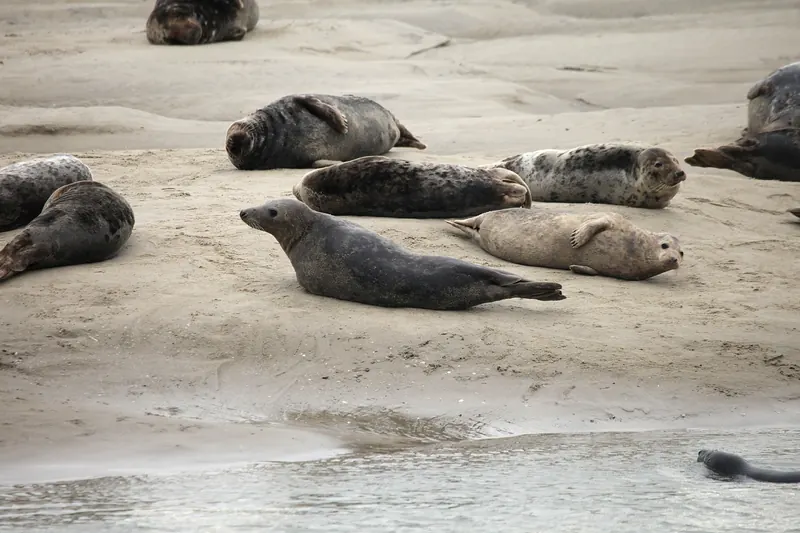
How to behave around seals
A seal disturbed while resting goes back into the water and loses precious energy; in summer, when harbour seals give birth, a disturbance can even separate a mother from her pup. Intentionally disturbing a protected species is also an offence.
- Keep at least 300 metres between you and the animals on foot, as specialists recommend.
- Watch through binoculars or a spotting scope, and take photos with a telephoto lens.
- If a seal raises its head towards you, you are too close: back away slowly.
- Keep dogs on a lead, and do not fly drones.
- A seal pup alone on the beach is not necessarily abandoned: do not touch it, move away and report it to the local authorities (town hall or emergency services), who will alert the specialists.
These rules also apply in the Authie bay and the Bay of Somme, which are very busy in summer.
Birds of the estuary and dunes
The Canche bay is a site of European importance for migrating birds. On its north bank, on the Étaples side, the Baie de Canche national nature reserve, designated in 1987, protects 505 hectares of dunes, mudflats and salt marshes; it is managed by Eden 62, the public body in charge of the Pas-de-Calais natural areas.
| Where | What to look for | Best time |
|---|---|---|
| Estuary mudflats | Shelducks, oystercatchers, curlews, dunlins, little egrets | All year, peaking during migrations |
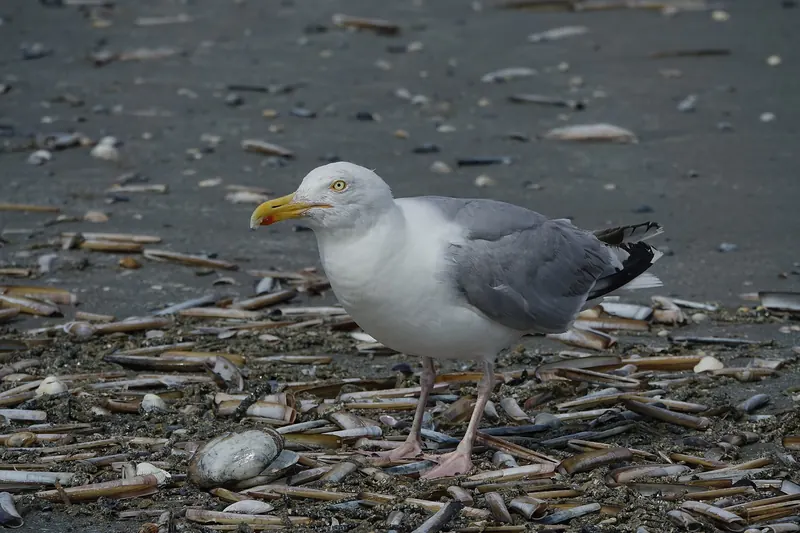
| Sandbanks and beach | Herring gulls, Sandwich terns in summer, plovers | Spring and summer |
| Skies over the bay | Spoonbills, ospreys stopping over on migration | Spring and late summer |
| Dunes and woodland edges | Nightjars, bluethroats, stonechats, linnets | Late spring and summer |
The best times are the spring (March to May) and autumn (August to October) migrations, on a rising tide, when the water pushes waders up the shore. Paths and hides dot the reserve; a waymarked trail of about 6 km starts from Étaples.
On the beach itself, look at the strandline, the line of seaweed and debris left by the high tide: it feeds many small birds and sandhoppers. Avoid trampling it and, if you pick up plastic litter, leave the seaweed in place. At low tide, the pools on the shore also shelter brown shrimps, small crabs and shellfish, which children love to observe before putting them back in the water.
In the forest and the Mayville dunes
Le Touquet's wildlife is not limited to the coast. The pine forest surrounding the town is home to the red squirrel, easily spotted in gardens and along the paths. To reduce collisions, in 2026 the town installed its first squirrel bridge, a rope walkway strung between two trees above an avenue in the Parc des Pins, and has identified other crossing points to equip.
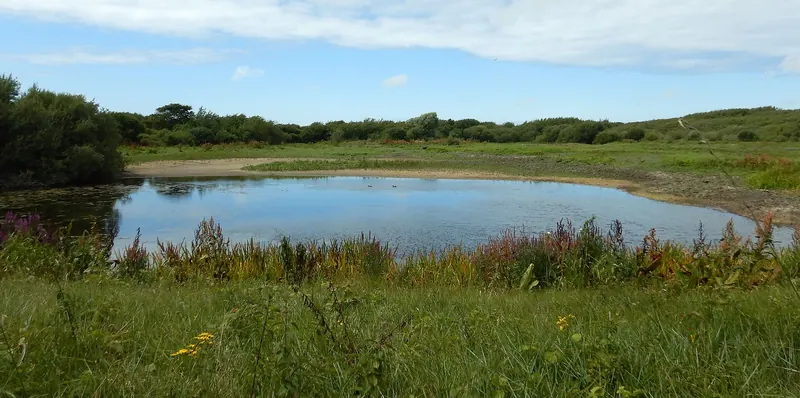
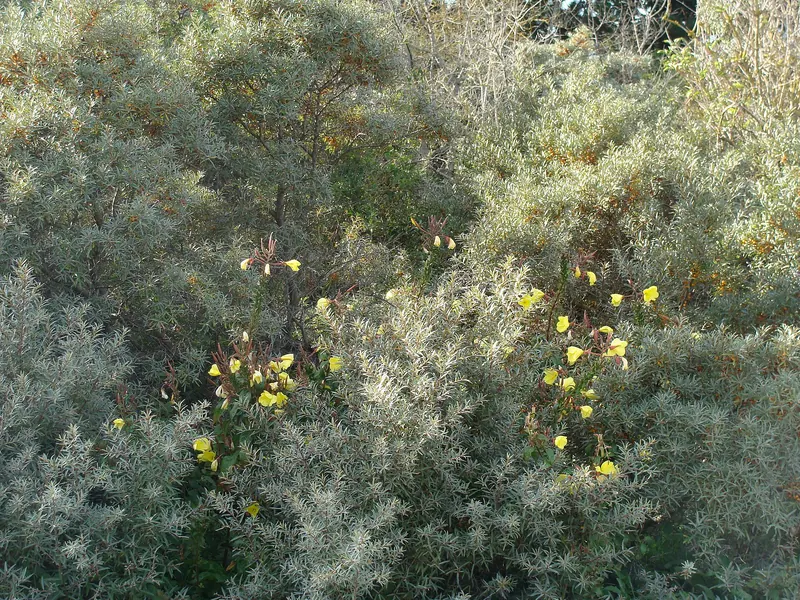
South of the town, the Mayville dunes form a large protected area of about 745 hectares between Le Touquet and Cucq. Their ponds and damp hollows, known as dune slacks, shelter discreet but remarkable wildlife:
- amphibians such as the natterjack toad, the European tree frog and the great crested newt;
- birds such as the black woodpecker, the nightjar and the bluethroat;
- dragonflies and butterflies of dune habitats;
- and, among the plants, rare orchids such as the fen orchid.
You can discover them by staying on the paths, ideally in spring, in the evening for the calls of amphibians and nightjars. These habitats are fragile: pick nothing and do not leave the paths.
Going further: the Authie bay and the Bay of Somme
To be almost sure of seeing seals, head a little further south. The Authie bay, south of Berck, hosts dozens of seals resting on the sandbanks, visible from afar from the beach. The Bay of Somme, further south still, is home to France's largest harbour seal colony, along with several hundred grey seals.
Birdwatchers can go on to the Parc du Marquenterre, in the Bay of Somme, renowned for its hides. Find more day trips in our article things to do around Le Touquet.
Charles's tip: check the tide the evening before. The best window for seals is one to two hours after high tide, when the first sandbanks appear: head on foot or by bike towards the Pointe du Touquet with binoculars, and settle on the dune rather than the beach. You will see them arrive one by one without disturbing them.
Planning your nature outing
- Check the tides on the tourist office tide page.
- Bring binoculars (8x or 10x), a windproof jacket and water.
- Go early or late in the day: fewer walkers, more animals.
- Book a guided tour if you want to understand what you are seeing: nature guides lend spotting scopes.
From Villa Mon Étoile, in the town centre, you can reach the Canche bay by bike in about a quarter of an hour via the clifftop road. To combine wildlife watching with a walk, see also our ideas for walks in Le Touquet and our outdoor activities.
Frequently asked questions
Can you see seals in Le Touquet?
Yes, harbour seals sometimes rest on the Canche bay sandbanks at low tide. You can watch them through binoculars from the Pointe du Touquet or the bird observatory.
Where can you be sure to see seals near Le Touquet?
In the Authie bay, south of Berck, and in the Bay of Somme, home to France's largest harbour seal colony. Your chances there are much higher than in the Canche bay.
How far should you stay from seals?
Specialists recommend at least 300 metres on foot. If a seal raises its head and looks at you, you are too close.
When is the best time for birdwatching in the Canche bay?
All year round, but especially during the spring (March to May) and autumn (August to October) migrations, ideally on a rising tide.
Are there squirrels in Le Touquet?
Yes, red squirrels live in Le Touquet's forest and gardens. The town has installed rope bridges to help them cross some of the avenues.
Sources and fact-checking
- letouquet.com/agenda/visite-guidee-a-la-rencontre-des-phoques-et-des-oiseaux-en-
- letouquet.com/le-touquet-paris-plage/ambiances-quartiers/espaces-dunaires/
- ofb.gouv.fr/actualites/les-phoques-de-la-mer-opale-sous-protection
- figaronautisme.meteoconsult.fr/actus-nautisme-flash/2026-08-14/91278-dans-les-ha
- fr.wikipedia.org/wiki/R%C3%A9serve_naturelle_nationale_de_la_baie_de_Canche
- birdingplaces.eu/birdingplaces/france/reserve-de-baie-de-canche
- inpn.mnhn.fr/docs/ZNIEFF/znieffpdf/310007277.pdf
- letouquet.com/wp-content/uploads/2026/07/cp-passages-ecureuils-le-touquet.pdf
Stay in the heart of Le Touquet
To enjoy everything described here on foot, stay at Villa Mon Étoile: two 55 m² apartments in an Art Deco villa, 300 m from the beach, from €140 per night.