 Villa Mon Étoile
Le Touquet weather: climate, temperatures and rainfall month by month
In short
Le Touquet has a mild oceanic climate: an average high of about 21 to 22 °C in July and August and 8 °C in winter, according to Météo-France's 1991–2020 climate normals. Around 890 mm of rain falls each year, mostly from October to December, and wind is frequent: always pack a windbreaker.
The weather in Le Touquet is that of a Channel resort: an oceanic climate, mild and changeable, with no heatwaves or severe cold. In summer the average high is around 21 to 22 °C; in winter it stays around 8 °C, and daytime frost is rare.
Here are the official month-by-month figures, taken from Météo-France's climate data sheet for the Le Touquet weather station, along with our practical tips for making the most of your stay whatever the sky.
What is the climate like in Le Touquet?
Le Touquet-Paris-Plage enjoys a temperate oceanic climate influenced by the Channel. The sea limits temperature swings: summers are rarely scorching and winters rarely freezing. Over the 1991–2020 period, the Le Touquet weather station recorded an average annual temperature of 11.2 °C, around 1,710 hours of sunshine and just under 890 mm of rain a year.
Three features characterise the weather on the coast:
- Variability: the sky changes quickly, and a grey morning often ends in sunshine.
- Wind: present all year round and stronger from October to March, it makes temperatures feel cooler.
- Mildness: on average there are only about 35 nights of frost a year, and days when it stays below freezing are rare.
Temperatures, rain and sunshine month by month
The table below shows Météo-France's 1991–2020 climate normals for the Le Touquet station (altitude 5 m). Temperatures are averages: some days will be noticeably warmer or cooler.
| Month | Average high | Average low | Rainfall | Rainy days (≥ 1 mm) | Sunshine |
|---|---|---|---|---|---|
| January | 7.6 °C | 2.6 °C | 77 mm | 13 | 62 h |
| February | 8.2 °C | 2.4 °C | 62 mm | 11 | 78 h |
| March | 10.9 °C | 4.0 °C | 54 mm | 10 | 133 h |
| April | 14.1 °C | 5.6 °C | 50 mm | 9 | 190 h |
| May | 17.2 °C | 8.7 °C | 59 mm | 10 | 210 h |
| June | 19.7 °C | 11.6 °C | 56 mm | 9 | 220 h |
| July | 21.4 °C | 13.8 °C | 59 mm | 8 | 225 h |
| August | 21.9 °C | 14.0 °C | 73 mm | 10 | 205 h |
| September | 19.5 °C | 11.6 °C | 77 mm | 10 | 161 h |
| October | 15.8 °C | 9.0 °C | 101 mm | 13 | 111 h |
| November | 11.3 °C | 5.6 °C | 114 mm | 14 | 63 h |
| December | 8.2 °C | 3.1 °C | 107 mm | 15 | 53 h |
| Year | 14.7 °C | 7.7 °C | 889 mm | 132 | 1,710 h |
Source: Météo-France climate data sheet, Le Touquet station, 1991–2020 statistics. Rounded values.
A few key points to remember:
- The warmest months are July and August, with average highs above 21 °C and nights around 14 °C.
- The sunniest months run from May to August, with more than 200 hours of sunshine a month.
- The driest month is April; the wettest is November.
- Hot spells are rare: on average there are fewer than three days a year above 30 °C.
The weather season by season
Spring
March is still cool, around 11 °C in the afternoon, but in April and May sunshine jumps to nearly 200 hours a month. It is also the driest time of year: a good moment for cycling and walking, with a jumper for the evenings.
Summer
From June to August, highs range between 20 and 22 °C. The heat is rarely oppressive, and the very long days keep the light until late in the evening. A few showers or a hazy sky are still possible, usually short-lived.
Autumn
September still feels like summer, with an average high of nearly 20 °C. From October, rain and wind gain ground, but the sunny spells bring beautiful light to the beach and the forest.
Winter
From December to February, highs stay around 8 °C and frosts occur mainly at night. The wind blows harder: it's the season for long, bracing walks and spectacular tides.
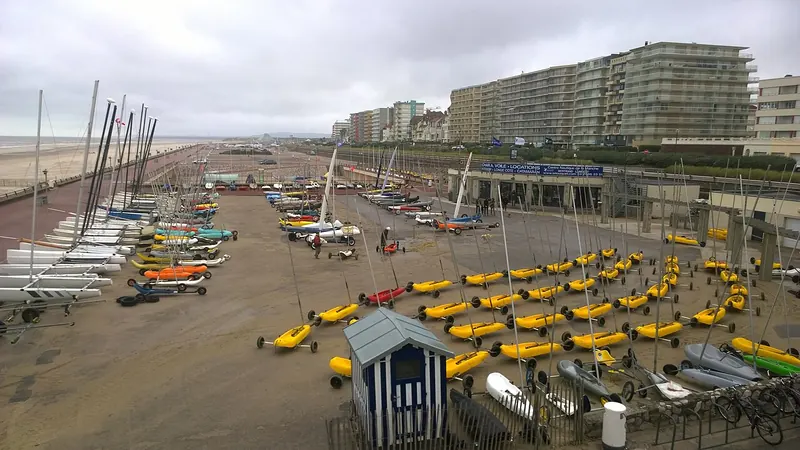
The wind, a force to be reckoned with
On Le Touquet beach, the wind matters as much as the thermometer. According to Météo-France, the average wind speed is about 4 m/s, or nearly 15 km/h, peaking in winter. Gusts above 58 km/h occur on about ten days in January, compared with three or four days a month in May, July, August and September.
This wind has its advantages: it makes the beach ideal for sand yachting and kitesurfing, and it quickly chases the clouds away. It also has its pitfalls: with an onshore wind, a 20 °C day can feel cool, and the sun burns without you noticing.
- Bring a windbreaker, even in summer.
- Settle behind a beach windbreak or at the foot of the dunes, without trampling them.
- Check Météo-France's weather warnings when strong wind is forecast, and avoid going out to sea.
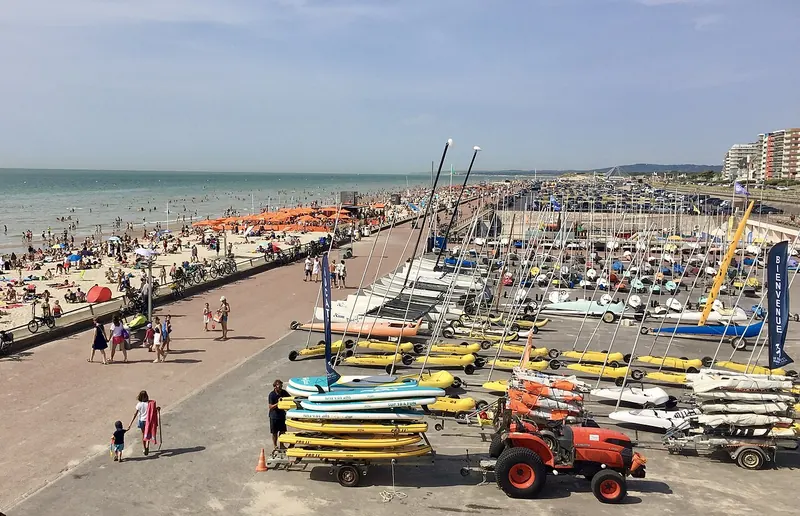
Sea temperature
The Channel warms slowly and stays cool. According to readings compiled by the Cabaigne website, the water at Le Touquet averages around 8 °C in winter, 14 °C in June, 16 °C in July and 18 °C in August and September. So swimming is most pleasant from late July to mid-September.
A little-known fact: September's water is on average almost as warm as August's, while the beach is much quieter. To choose your dates, see our article when to go to Le Touquet.
What to pack for each season
| Season | Essentials |
|---|---|
| Summer | Swimsuit, sun cream, hat, light windbreaker, jumper for the evening |
| Spring and autumn | Waterproof jacket, layers, closed shoes |
| Winter | Warm coat and windbreaker, woolly hat, boots or waterproof shoes |
Whatever the season, shoes that don't mind wet sand are useful for walks at low tide.
Where to check the weather before and during your stay
For forecasts, rely on official sources:
- Météo-France, for local forecasts and weather warnings (wind, storms, coastal flooding).
- The weather page of the Le Touquet tourist office, which also provides tide times and beach webcams.
And if the rain shows up, don't worry: the museum, the covered market, shops and shows take over. Our ideas are gathered in the article what to do in Le Touquet when it rains, and all the fine-weather activities in things to do in Le Touquet. From Villa Mon Étoile, about 300 m from the beach, it's easy to make the most of a sunny spell as soon as it comes.
Charles's tip: check the beach webcam and the tide time before heading out, rather than just the forecast icon. A sky forecast as "cloudy" can very well bring long sunny spells, and a low tide in the late afternoon often offers the most beautiful light of the day.
Frequently asked questions
What is the average temperature in Le Touquet in summer?
In July and August, the average high is about 21 to 22 °C and the average low about 14 °C, according to Météo-France's 1991–2020 normals.
Does it rain a lot in Le Touquet?
On average just under 890 mm of rain falls each year, spread over about 130 days. October, November and December are the wettest months, April the driest.
Is it cold in Le Touquet in winter?
No, winter is mild: the average high is around 8 °C from December to February. The wind can, however, make it feel cooler.
What is the sea temperature in Le Touquet?
It averages around 16 °C in July and 18 °C in August and September, dropping to around 8 °C in winter.
What is the sunniest month in Le Touquet?
July, with around 225 hours of sunshine on average, closely followed by June, May and August.
Sources and fact-checking
Stay in the heart of Le Touquet
To enjoy everything described here on foot, stay at Villa Mon Étoile: two 55 m² apartments in an Art Deco villa, 300 m from the beach, from €140 per night.